
Antoine Dufilho
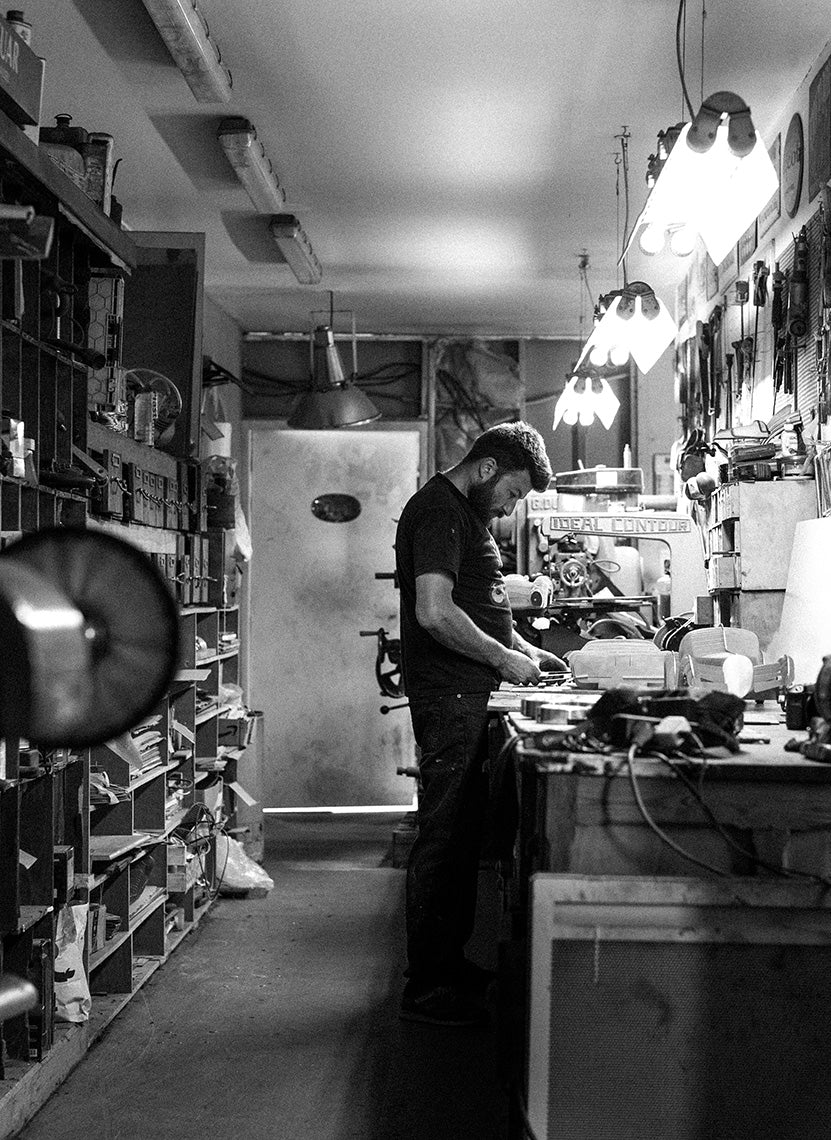
Antoine Dufilho
THE GENESIS
Between the names Dufilho and Bugatti, there is an almost palpable link, which was woven through the passion of several men.
It was first Jacques, Antoine’s great-uncle, who had the chance to collect Bugattis. This immense passion was passed on to his nephew and naturally, as one passes on a genetic heritage, the torch passed to Antoine.
Architectural studies then led him towards a new approach to sculpture, in particular towards the work of the framework, which once exposed reveals a succession of solids and voids, bringing lightness and dynamism to the general form.
Antoine Dufilho is self-taught, he experiments with different techniques such as molding and welding to gradually build the aesthetics of his art around this DNA which characterizes him; he began to devote himself fully to it in 2012.
KINETIC VISIONS
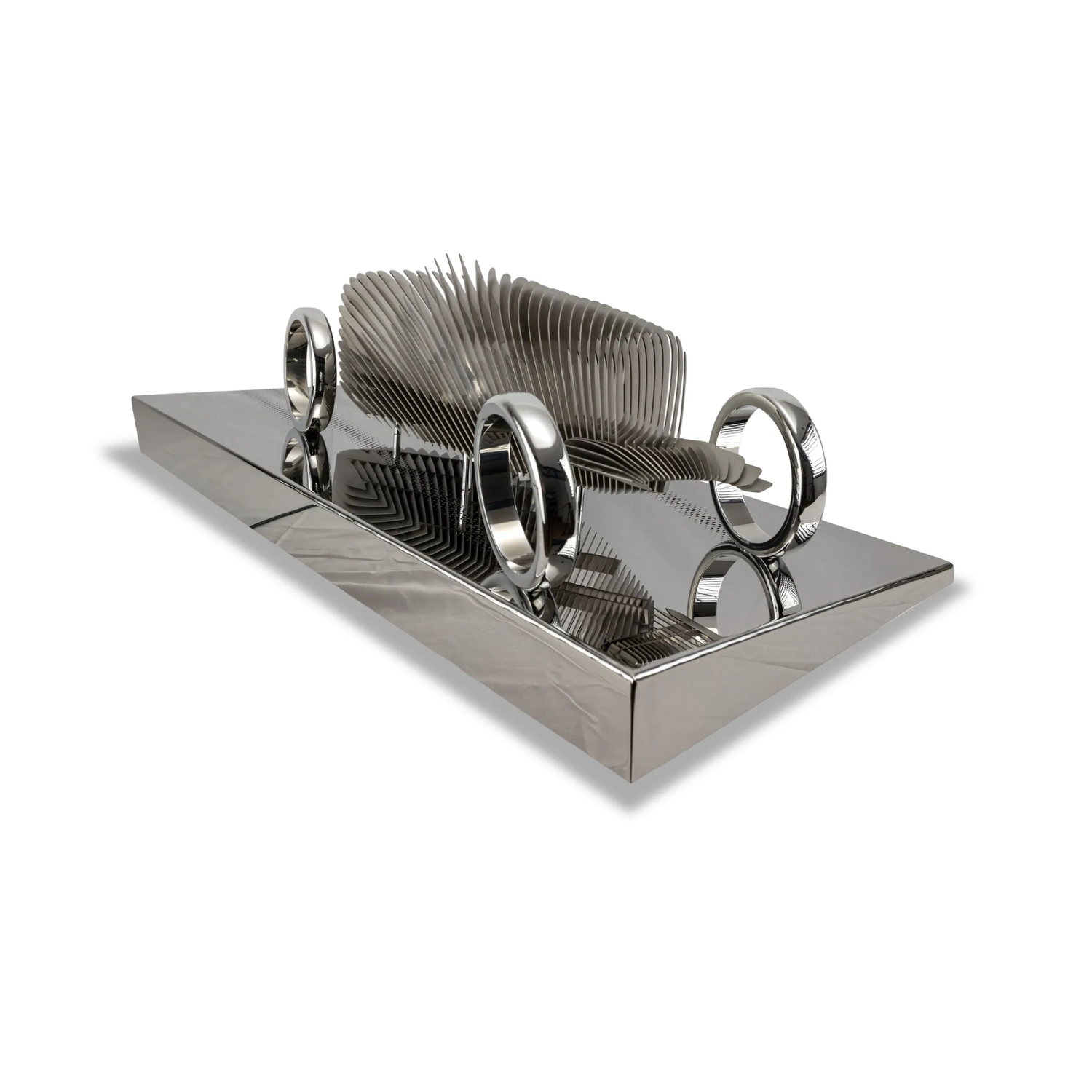
His work consists of exposing an alternation of solid and empty, materializing a skeleton, breaking down the forms into successive layers. A movement is created by this sequenced representation.
It is therefore a kinetic vision of a static object that the artist offers us, in particular thanks to the wandering of his observer, which allows a different interpretation depending on his point of observation.
The dynamic effect is accentuated by alternating symmetries and asymmetries, causing an acceleration or deceleration effect.
NOURISHED BY THE STUDY OF ARCHITECTURE
A graduate of the Lille School of Architecture and Landscape, he was able to design and build the workshop himself in the Lille countryside, using maritime containers, in which all his works are created.
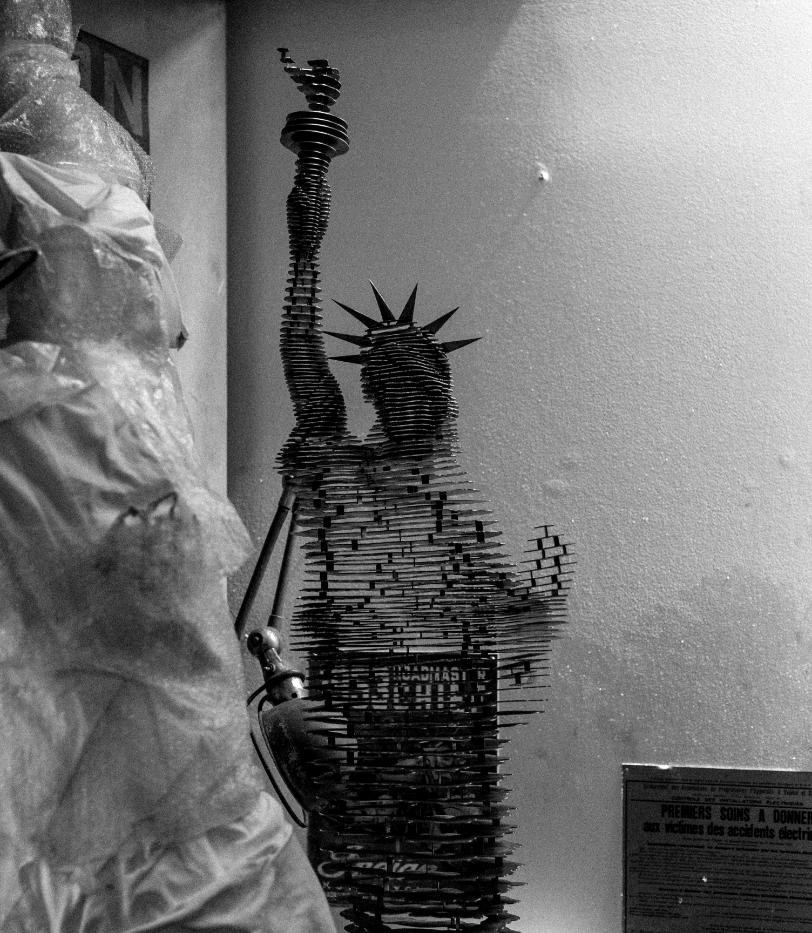
It is therefore logical that Antoine Dufilho launched into the design and creation of monuments like the Chrysler Building and historical symbols like the Eiffel Tower or the Statue of Liberty.
A NEW STAGE
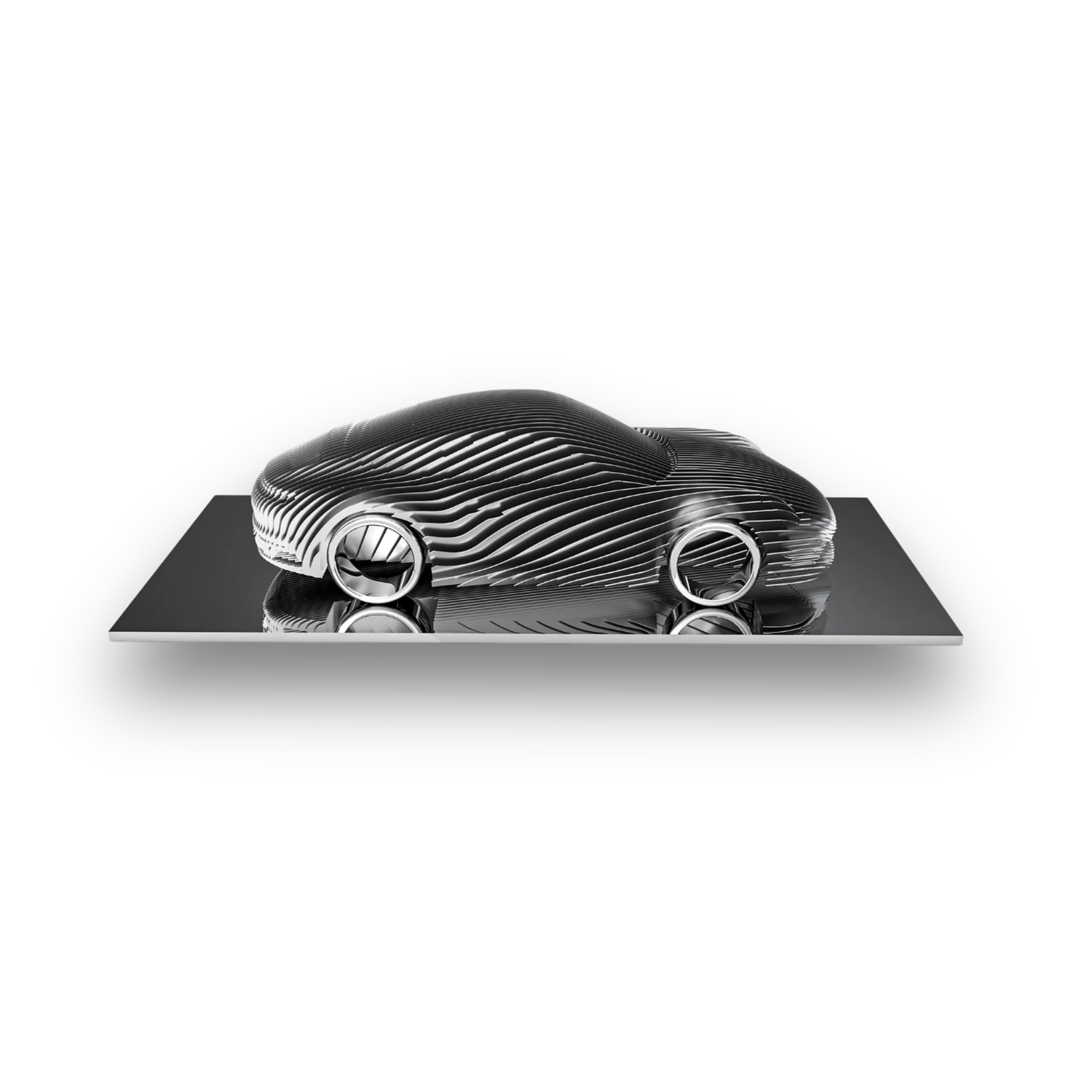
It is therefore a new step for Antoine Dufilho, who used his passion for automobiles and his knowledge of architecture to learn sculpture, different techniques, to put different concepts into practice, and more generally, to discover his style.
He now wishes to apply his work on the representation of movement and lightness in the abstract, which will allow him to go even further in his art.
-
Ferrari 812 Superfast
Supplier:Antoine DufilhoUsual price $0.01 EURUsual price -
 Sold
SoldPorsche GT3 Touring
Supplier:Antoine DufilhoUsual price $0.01 EURUsual price -
Porsche GT3 Touring
Supplier:Antoine DufilhoUsual price $0.01 EURUsual price -
Mercedes G-Class
Supplier:Antoine DufilhoUsual price $0.01 EURUsual price -
Mercedes 300SL
Supplier:Antoine DufilhoUsual price $0.01 EURUsual price -
Lamborghini Countach
Supplier:Antoine DufilhoUsual price $0.01 EURUsual price -
Jaguar type e - Speed
Supplier:Antoine DufilhoUsual price $0.01 EURUsual price -
Mercedes 300SL
Supplier:Antoine DufilhoUsual price $0.01 EURUsual price -
Ferrari Daytona SP3 - Textured Red
Supplier:Antoine DufilhoUsual price $0.01 EURUsual price -
Porsche 992 Carrera 4s
Supplier:Antoine DufilhoUsual price $0.01 EURUsual price -
Porsche 992 carrera 4s
Supplier:Antoine DufilhoUsual price $0.01 EURUsual price -
 Sold
SoldJaguar E-Type
Supplier:Antoine DufilhoUsual price $0.01 EURUsual price -
Porsche 991 GTS
Supplier:Antoine DufilhoUsual price $0.01 EURUsual price -
Ferrari 330 P4
Supplier:Antoine DufilhoUsual price $0.01 EURUsual price -
Porsche 356
Supplier:Antoine DufilhoUsual price $0.01 EURUsual price -
Ferrari Dino 246
Supplier:Antoine DufilhoUsual price $0.01 EURUsual price -
Porsche 992 Sport Classic
Supplier:Antoine DufilhoUsual price $0.01 EURUsual price -
Morgan - Plus Four 2021
Supplier:Antoine DufilhoUsual price $0.01 EURUsual price -
Porsche 997 - AdiKt Gallery Special Edition
Supplier:Antoine DufilhoUsual price $0.01 EURUsual price -
Lamborghini Murcièlago
Supplier:Antoine DufilhoUsual price $0.01 EURUsual price -
 Sold
SoldShelby AC COBRA
Supplier:Antoine DufilhoUsual price $0.01 EURUsual price -
 Sold
SoldAlpine Berlinette
Supplier:Antoine DufilhoUsual price $0.01 EURUsual price -
 Sold
SoldAston Martin DB5
Supplier:Antoine DufilhoUsual price $0.01 EURUsual price -
 Sold
SoldBugatti 35
Supplier:Antoine DufilhoUsual price $0.01 EURUsual price


